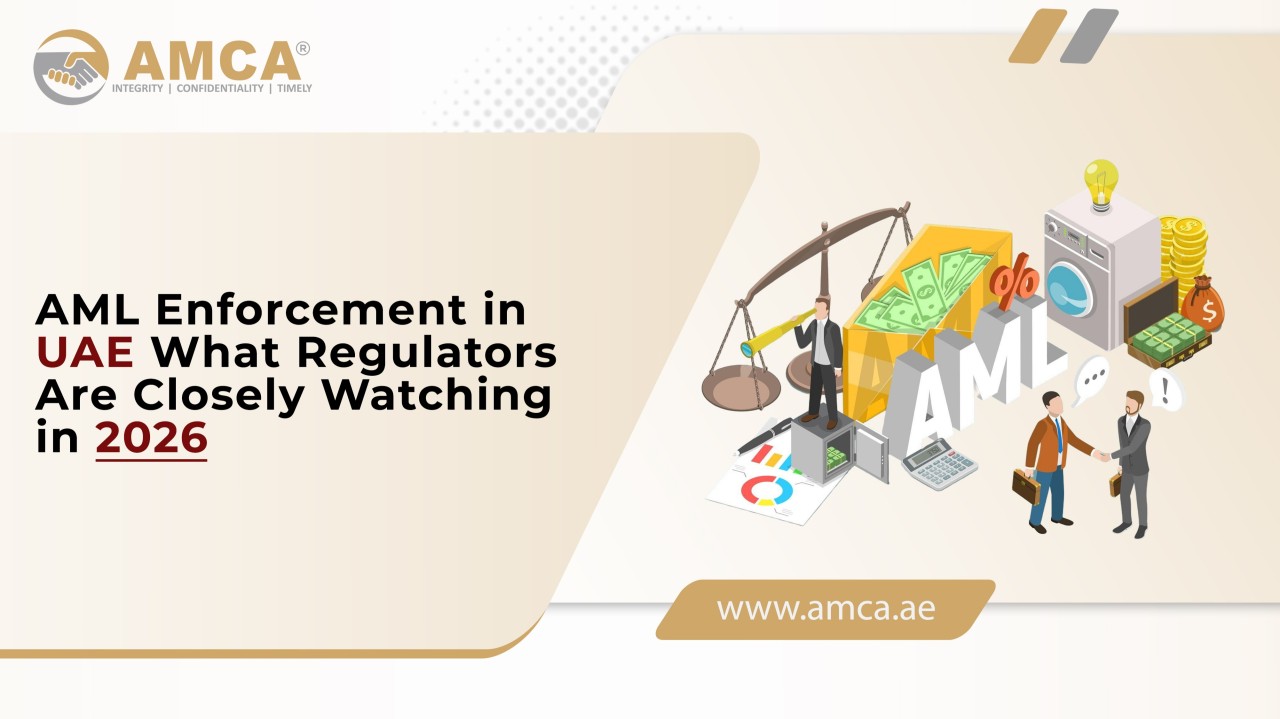
Even small compliance gaps are now being detected faster than ever, here’s what regulators are focusing on
AML enforcement in the UAE has become significantly more advanced in 2026, shifting from periodic reviews to continuous, data-driven monitoring. Under Federal Decree-Law No. 10 of 2025 on Combating Money Laundering, Terrorist Financing, and the Financing of the Proliferation of Weapons, and its implementing regulation Cabinet Resolution No. 134 of 2025, businesses in the UAE are required to maintain full transparency in ownership structures, financial transactions, and reporting obligations.
The UAE’s AML framework in 2026 has undergone a notable transformation, combining updated regulations with increased scrutiny and quicker identification of compliance gaps.
Regulators including the UAE Financial Intelligence Unit (FIU), Central Bank, and Ministry of Economy are now cross-verifying banking activity, UBO declarations, and licensing records in real time to identify inconsistencies.
Key AML Areas Under Active Monitoring
-
Maintenance of AML Policies & Procedures – Regular review and updating of AML policies is closely examined by regulators to ensure alignment with current requirements.
-
Risk Based Approach (RBA) – The effectiveness of the risk-based approach, including customer risk classification and mitigation measures, is evaluated by authorities.
-
CDD & KYC – Adequacy of KYC and CDD processes, including UBO identification and enhanced due diligence for high-risk and PEPs, is verified during regulatory inspections.
-
Transaction Monitoring – Ongoing transaction monitoring systems are reviewed by regulators to assess their ability to identify and escalate suspicious activities.
-
Independent AML Audit – The existence and effectiveness of an independent AML audit function are key areas authorities focus on during assessments.
-
Compliance Officer Appointment – A suitably qualified and independent Compliance Officer is expected, with regulators assessing their role and effectiveness in practice.
-
goAML Registration – Proper registration and functionality on the goAML portal are confirmed as part of regulatory checks.
-
TFS Sanctions Screening – Screening processes against UN and local sanctions lists are scrutinized by authorities to ensure accuracy and timeliness. TFS Subscription by authorized email is also essential.
-
High-Risk Jurisdictions Monitoring – Enhanced controls for high-risk jurisdictions, particularly those identified by the Financial Action Task Force, are assessed by regulators.
-
Record Keeping & Documentation – Maintenance, completeness, and retention of AML records are subject to verification by authorities.
-
Governance & Oversight – Senior management involvement and AML oversight frameworks are areas of focus during regulatory reviews.
-
AML Training & Awareness – The adequacy and frequency of AML training programs and materials are examined by regulators.
-
Regulatory Reporting (SAR/STR) – Timeliness and quality of reports including SAR/STR submissions are assessed by authorities as part of ongoing supervision.
Why Businesses Need to Pay Attention
Non-compliance under Federal Decree-Law No. (10) of 2025 regarding Anti-Money Laundering and Combating the Financing of Terrorism and Proliferation Financing can lead to administrative penalties, banking restrictions, and significant reputational risk. Additionally, alignment with Federal Decree-Law No. 47 of 2022 on Corporate Tax is increasingly important, as inconsistencies between tax filings and AML/financial records are now more easily detected through integrated regulatory monitoring and data cross-checking mechanisms.
How AMCA Supports You?
At AMCA, we help businesses stay ahead of regulatory scrutiny by:
-
Reviewing and updating UBO and AML compliance records
-
Identifying hidden compliance gaps before regulatory action
-
Aligning financial, tax, and AML documentation standards
-
Preparing businesses for banking and regulatory assessments
AML compliance in 2026 is not just a requirement; it is a business credibility benchmark.
Reach out to AMCA for AML compliance support and advisory assistance.

.jpg "What is AML compliance and why is it mandatory for UAE businesses?")
.jpg "AML High-Risk Business Categories in UAE: Are You on the Watchlist?")